
No products added!

Written by
vijaysoracle@gmail.com
July 12, 2026
Introduction
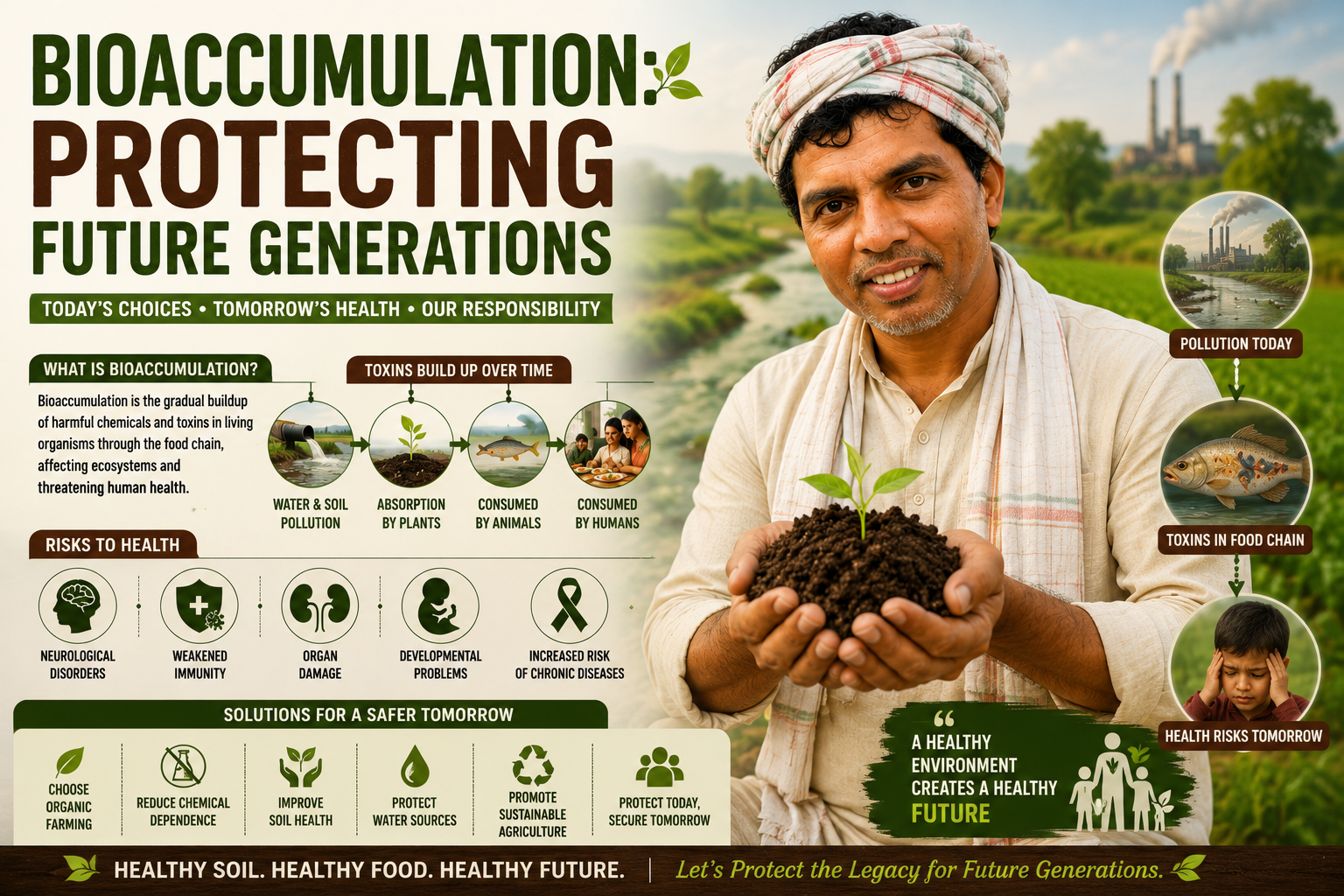
Bioaccumulation is the gradual buildup of harmful chemicals, pesticides, heavy metals, and other toxic substances in living organisms over time. These contaminants can accumulate in plants, animals, and humans through the food chain, posing long-term risks to health and the environment. As modern agriculture and industrial activities continue to expand, understanding the effects of bioaccumulation has become increasingly important. By adopting sustainable farming practices and reducing exposure to harmful chemicals, we can help protect both current and future generations.What is Bioaccumulation?
Bioaccumulation is the process by which toxic substances accumulate in an organism faster than they can be broken down or eliminated. These substances remain in tissues and become more concentrated over time. Common pollutants that contribute to bioaccumulation include:- Heavy metals such as lead, mercury, and cadmium
- Chemical pesticides
- Industrial pollutants
- Persistent organic pollutants (POPs)
- Contaminated water and soil
How Does Bioaccumulation Occur?
Bioaccumulation usually follows this cycle:- Chemicals enter soil or water.
- Plants absorb contaminants.
- Animals consume contaminated plants.
- Humans consume contaminated food.
- Harmful substances accumulate in the body over many years.
Health Risks of Bioaccumulation
Long-term exposure to accumulated toxins may contribute to:- Reduced immune function
- Hormonal imbalance
- Neurological disorders
- Kidney and liver damage
- Developmental problems in children
- Reproductive health concerns
- Increased risk of chronic diseases
Impact on Agriculture
Bioaccumulation affects agricultural sustainability by:- Reducing soil quality
- Contaminating crops
- Decreasing food safety
- Affecting livestock health
- Lowering agricultural productivity
- Increasing environmental pollution
Preventing Bioaccumulation
Farmers and communities can reduce bioaccumulation by:- Using organic manure and bio-based fertilizers
- Reducing excessive pesticide use
- Improving soil organic matter
- Practicing sustainable agriculture
- Monitoring soil and water quality
- Following integrated pest management
- Promoting organic farming methods